The music video I will be analysis will be Girl in a Country Song by Maddie and Tae (2014) which points out the problem of Male Gaze and even challenges it:
Girl in a Country Song is a country song as implied by certain mise-en-scene. There are hay bails, the music video is based on a farm, the men are wearing red tartan shirts and the women singers wear American bikini's as that is where the genre originates from.
Gender is represented in the music video by cinematography; there is a high pan of alot of girls in skimpy clothing as one of the first shots, the females dominate the frame. This represents them as dominant to men as they are seen out numbering them.
Later on there is a medium shot of the men reacting to the women in bikini's, there is even a zoom of a
man doing a wolf whistle. This implies that women are not respected in the country genre and are just there to look at.
However there is a close up of a "role reversal" button which causes the day to start again and the men to appear in bikini's. This is implied by some of the same shots being played again except with
men and not women. This shows that the music video is defying gender stereotypes of country girls.
Near the end of the music video there are a series of close ups on male body parts (bum, legs) that are conventionally used on women to show sexy themes. This also supports that the conventional roles
of gender have been reversed.
The mise-en-scene also shows the music video defying gender stereotypes. For example, it is a cliche' in films of women in bikini's doing a car wash. However this cliche' is defied when it is done using men in bikini's, this is to show that it is unfair and wrong as it makes the audiences feel uncomfortable when they are made to
"male gaze" upon men instead of women. This creates empathy for women who are forced to look at women in a male gaze fashion due to music video conventions.
There is also men seen with trays of food serving women which also reverses the cliche's of what is expected of a woman.
Mise-en-scene also reveals the conventions of music videos and how they are used in this one, for example there are two locations, one is a stage made out of trucks / four by four cars and the girls singing, the other is the country party in which the roles are reversed. The editing cuts between these two locations to show this is what the singers want. Cutting between singers and a narrative is also a convention for music videos. Another convention is used at
the beginning and end which is a bedroom scene where the singers are creating / planning the lyrics for the song as well as the music video. This shows that they are rebelling against stereotypes as they want a reversed music video.
Editing is used in the music video to represent gender roles, for example; there is an eye-line match of the men looking at the women, this represents the women as objects that are only there to be looked at. It represents a "male dominated" environment.
There is also a series of slow motion shots of men in bikini's which is conventionally used on women to represent men staring at them, this shows how the music video is going against convention and is quite feministic.
The lyrics used in the song also defy stereotypes as the women in the music video are writing it. One of the singers say "Can I put some real clothes on now?" implying that she believes that women shouldn't have to appear appealing to males. She also says that they "need a little respect" which also supports this.
In Conclusion, all the micro-technical aspects convey the representation that women are equal to men and shouldn't how to be appealing to them if they don't want to. The music video also follows the conventions of the average music video, cross cutting between locations and singers, using pans around the singers. The sound editing was also conventionally synchronous editing. It also follows Country genre conventions because of the mise-en-scene being conventionally symbolized as the country side in the USA; hay bails, four by four trucks, sunset and acoustic guitars.
Intertaxtuality - text which alludes to or references to another text.
Some of these references made within a text can be considered iconic and easily recognised because of the style. Referencing certain texts can reinforce the feeling of nostalgia and familiarty to the audience.
1969 - Julia Kristera (Literally Critic and Sociologist)
- "The shaping of texts meaning by another text"
-"The use of an intertextual reference in any text is the absorption and transformation of another"
A good example of Intertextuality is Lady GaGa's music video; Telephone:
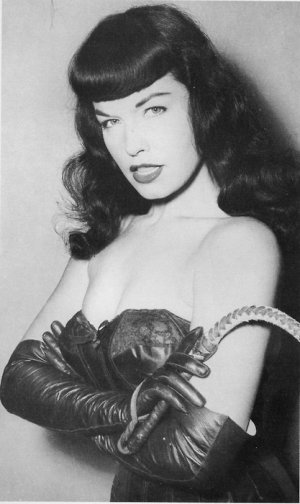
In the 1950's, there was a very famous glamour model and pin-up girl called Bettie Page, her photos were very exotic and she was iconic because of her jet black hair and fringe. In Telephone, Beyonce appears with the same black hair and fringe, therefore making an intertextual reference.
(Bettie Page)
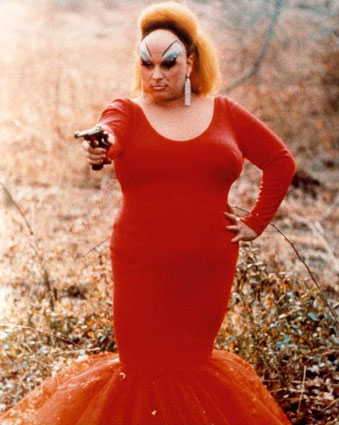
The security guards in the music video appear very "macho" even though they are female. This references to a famous US actor and drag queen; Divine. In her career she starred in many camp hollywood films, the most famous being "Pink Flamingo's"
(Divine in Pink Flamingo's)
In telephone there is alot of sexual themes involved along with camp costumes , this references to the French Fashion and Art photographers Pierre and Giles. Here is some of their work:
The picture on the left also references Beyonce's costume as well as the sexual theme's involved in the video.
This shot also represents the sexual themes as Lady Gaga has chains around her which is similar to the S&M themes that are shown in the photo to the left.
The camp theme in Telephone is shown by the female masculine security guards.
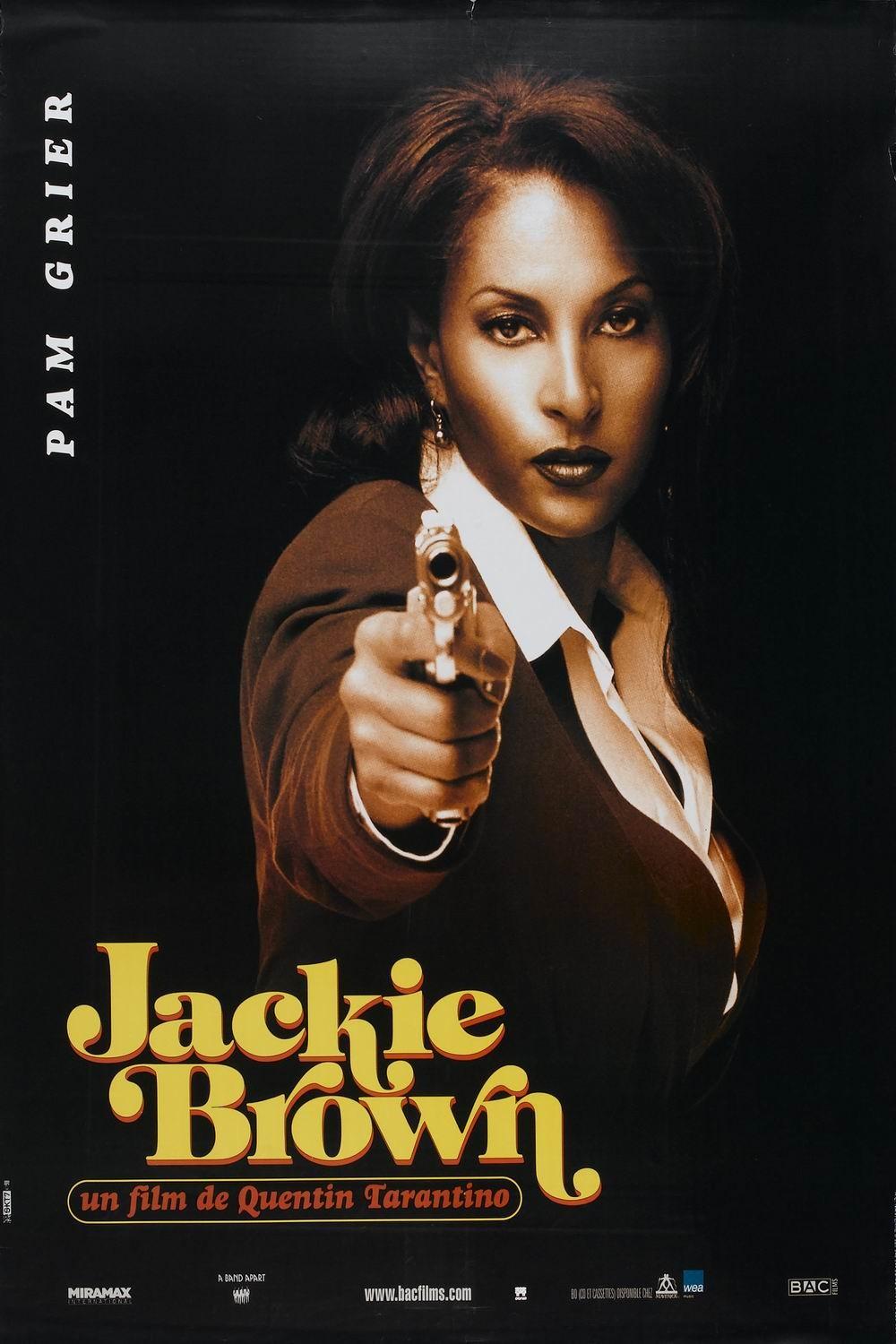
Another intertextuality is the typography used at the start of the opening sequence. The typography is the exact same as the typography used in the film "Jacki Brown" which was directed by Quentin Tarantino. This text is used as it gives a 1970's retro vibe, which links to all the other intertextual references.
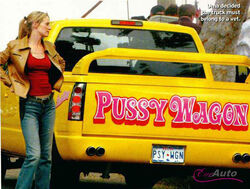
Another reference to Quentin Tarantino is the the car which is called "Pussy Wagon", this is a direct reference to another film called "Kill Bill"
Another reference to the "Pussy Wagon" could be the director Russ Meyer who was a director of sexploitation films. These films were made in the 60's and 70's for adult males, which involved alot of women in minimal clothing. One of his films which lionks to the "Pussy Wagon" is called "Faster Pussycat Kill Kill".
Lady Gaga's bright blonde, wavy hair is an intertextual reference to Roy Lichenstein who was an artist of the pop-art style. Many women illustrated in this style were seen with bright yellow wavy hair.
Another pop-artist who is delibratley referenced is Andy Warhol created prints of consumer products like Campbell's Soup Canns. This is referenced in Telephone when Lady GaGa wears Coke canns in her hair which is another consumer product used in an artistic way.
The ending sequence of Telephone ended with Lady Gaga and Beyonce riding off in the desert with police chasing them. This references a film called Thelma and Louise about two lesbians who are criminals because they murdered a man who was trying to rape them. The two of them go on the run to get away from the police. At the end they get surrounded by police and drive off a cliff together.
(Telephone)
(Thelma and Louis)
The big onomatopoeia graphic references the 1960's Batman and Robin TV show, in this TV show whenever Batman and Robin get into a fight with villains, big onomatopoeia graphics appear on screen when a punch connects. The costumes in Telephone also reference the show as they are very camp like the Batman and Robin suits.
Superheroes; Captain America and Wonder-woman are also referenced in the end of Telephone when both Lady GaGa and Beyonce dress up in star spangled banner costumes. These superheroes fit in with the other old, retro references as they were created all the way back in the 1940's.
Fall Out Boy - Irresistible
Like in Telephone, other music videos have intertextual references also. For example in Fall Out Boy's music video for Irresistible, there is a constant fuzzy effect and consistently cheesy editing all the way through, this refers back to old TV shows in the 1970's as well as VHS tape quality.
The typography used in the opening sequence also refers to retro, classic films and TV shows in the 70's and 80's.
(Fall Out Boy - Irresistible)
(Perfect Strangers - 1986 )
(Taxi - 1983)
The typography used is very similar as the typography used in a short film called "Bedussey" that was made by members of the band in the 90's. The short film also had a funky 1980's score to it also.
The boom box prop used in this video is also a classic reference to 1970's and 80's american street culture. People would carry these round and play them in the street. The members of the band are also playing basket ball which also supports the references to american street culture.
This music video also subtly references the band's other songs and music videos. For example:
There last album had a series of music video's that lead on from one and other to make a film, in this "short film" the lead singer Pete Stump gets his hand cut off. In Irresistible, he looses a prosthetic hand when he tries to catch a basketball.
The short film "Bedussey" also appears at the end of the music video to imply that this music video was recorded over it, just like what people did with VHS tapes. I believe they reference this very unknown short film to acknowledge their hardcore, older fan-base who have been around for a long time.
(Scene from "Bedussey")
Another reference to a previous song is when fire works appear around a woman when she looks at one of the band members who just missed a shot. This implies the lyrics: “You and I were fire, fire, fireworks/That went off too soon" from the song 4th of July.
There are also modern references to trends in the music video. For example, emoji's appear on the actors and band members eyes depending on what they react to. Heart emoji's appeared in a band members eyes because he saw a "Will you marry me" sign.
Another modern trend reference is a "thug life" edit on one of the men in the crowd watching the basket ball game. This was a trend at the time the music video was released; if someone did something that made them think they looked cool, the video would fade black and white with a title saying "Thug Life". These videos went viral all over social media.
The bass player Pete Wentz references a Michael Jordan-esque air walk dunk when his team mates pick him up and carry him over to the hoop. This not only references Michael Jordan but it has been a cliche use of basketball humor in many films.
"Teleshopping" commercials are also referenced when the referee gives a woman in the crowd a new pair of shoes. This is shown by a cheesy explosion graphic saying "SALE"
(teleshopping)
Alot of cheesy slapstick moments also happen, for example the bass player gets knocked back by his opponent and turns into a rag doll. This references old 1970's films which make it very obvious that actors don't do stunts.
Another cheesy slapstick moment is when a basket ball player holds one of the band members by the head whilst the band member is trying to punch him. This is an extremely cliche moment in many cartoons.
Male Gaze
The male gaze - objectification of women's bodies in the media has been a constant theme.
Laura Mulvey (1975) - argues the dominant point of view is masculine. The female body is revealed for masculine erotic pleasure (voyeurism)
Women are objectified by the camera lens via close up shots and tilts (conventionally used when woman first appears in films) and whatever gender the spectator is, they are forced to accept the masculine point of view. Women in the modern day watch films and don't realise they are watching the woman in a male gaze form.
John Berger wrote a book called "The Way of Seeing" which quotes:
"men act and women appear"
"men look at women, women watch themselves being looked at"
"women are aware of being seen by a male spectator"
Examples of Male Gaze:
50 Cent - Candyshop
Nick Jonas - Under You
Fergie - M.I.L.F.$
Examples of Female Gaze Female Gaze is the modern societies way of equality, if the camera is aloud to look at women erotically, it should also be able to look at men. Jennifer Lopez - I Luh Ya Papi
Carle Rae Jepsen - Call Me Maybe
Stereotypes in music videos
Codes and conventions in music videos and in the Indie Rock genre
A promotion package for the release of an album to include a music promo video, together with:
A cover for its release as part of a digipak (CD/DVD package)
A magazine advertisement for the digipak (CD/DVD package)
I have chosen to do a music video as I feel like it would be quite a refreshing project seen as I haven't attmpeted anything like this before. I also really enjoyed creating my transition task final edit. I am very passionate about certain songs and would like to make a music video for one of them as a tribute.

 Later on there is a medium shot of the men reacting to the women in bikini's, there is even a zoom of a
 However there is a close up of a "role reversal" button which causes the day to start again and the men to appear in bikini's. This is implied by some of the same shots being played again except with


 There is also a series of slow motion shots of men in bikini's which is conventionally used on women to represent men staring at them, this shows how the music video is going against convention and is quite feministic.